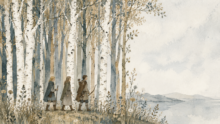

Some Victories Cost More Than They Seem
The horse had a beautiful meadow.
The grass was rich, the water ran clear, and there was enough room to roam. Then a stag began crossing into the pasture. Again and again, the stag drove the horse away from the best grazing. The horse fought back each time, but the conflict never truly ended. No matter how hard he defended his ground, he could never quite relax.
Eventually, tired of constant struggle, the horse sought help from a man. “I can drive the stag away,” the man said, “but you’ll need to wear a bit and saddle.” The horse agreed. Together they chased the stag from the meadow. At last, the pasture was quiet again. The horse could graze in peace.
When the work was finished, the horse thanked the man and asked him to remove the saddle. But the man smiled. “No,” he said. “You’re far too useful now.”
The stag was gone. The saddle remained. For centuries, this fable has been told as a warning against sacrificing freedom for revenge. But each time I return to it, I find myself seeing something else.
I don’t think the horse wanted revenge. I think he wanted rest.
When Constant Vigilance Becomes Normal
There are seasons in life when our nervous system never really gets to exhale. We learn to stay alert because staying alert makes sense. For me, those lessons began when I was in third and fourth grade.
It wasn’t one dramatic event. It was several experiences that happened within the same house, close enough together that my body began connecting the dots.
I became hypervigilant because I wasn’t safe. Being good meant being invisible. When difficult things happened, we didn’t talk about them. No one explained what had happened or what to do next time. We simply moved on.
I learned to not make the same mistake twice. And perhaps most telling of all, I believed every family lived this way. At eight or nine years old, you don’t have another childhood to compare yours with.
You simply assume this is how the world works.
The Saddles We Wear Without Knowing
Looking back, I can see that my nervous system wasn’t trying to make me anxious. It was trying to make me safe. It learned to listen for changes in someone’s voice before I consciously noticed them. It learned to scan rooms before settling into them. It learned that staying small was often easier than being seen.
None of those lessons were spoken aloud. My body learned them anyway. Like the horse, I accepted a saddle long before I realized I was wearing one.
At first, it helped. Hypervigilance catches things. People-pleasing reduces conflict. Perfection avoids criticism. Being invisible often feels safer than being noticed. Those strategies are remarkably effective—especially for a child who has very little control over her world.
The problem is that our nervous systems don’t automatically recognize when the danger has passed.
Why The Body Holds On
Today we know that repeated stress changes the way the brain and nervous system respond to the world. When experiences feel unpredictable or overwhelming—especially during childhood—the brain becomes more efficient at detecting possible danger. It begins anticipating problems before they arrive.
That isn’t weakness. It’s adaptation. The nervous system is always asking one question: “What helped me survive last time?” Then it repeats the answer. Years later, the original circumstances may be gone, but the body is still working from an old map.
For those of us living with fibromyalgia or other conditions shaped by nervous system sensitization, this can feel painfully familiar. Our bodies become exceptionally good at protecting us.
Sometimes they become so good that they struggle to remember how to rest.
The Horse Was Never Weak
One of the saddest misunderstandings about trauma is that people often blame themselves for the adaptations that once protected them.
“I should have gotten over it.”
“I shouldn’t still react this way.”
“I don’t know why I’m like this.”
But the horse wasn’t foolish for accepting the saddle. He made the best decision he could with the choices he believed he had. Children do the same. We don’t choose our survival strategies because they’re ideal. We choose them because they work.
The remarkable thing isn’t that we developed these patterns. The remarkable thing is how brilliantly our nervous systems learned to keep us going.
The invitation now isn’t to criticize the saddle. It’s to notice that we’re still wearing it.
Learning A Different Way To Walk
Healing isn’t about pretending the pasture was always safe. It isn’t about blaming ourselves for adapting. And it isn’t about ripping the saddle off overnight.
Sometimes healing looks much quieter than that. It looks like noticing when your shoulders tense before anyone has spoken. It looks like realizing you no longer have to disappear to belong. It looks like discovering that being seen is no longer as dangerous as your body once believed.
Little by little, the nervous system begins collecting new evidence. Not every room is the old house. Not every silence hides trouble. Not every mistake requires punishment.
The horse may never forget the years he wore the saddle. But perhaps one day he remembers something even older. How it felt to run before anyone ever placed it on him.
Closing Reflection
Some strategies are meant for survival, not for a lifetime. The saddle may have carried you through the hardest seasons of your life.
That doesn’t mean you have to wear it forever.
