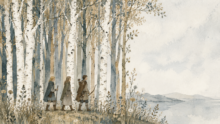

The Visits That Changed Everything
An elderly woman lived alone in a modest cottage where every object held the memory of a life well lived. Time, however, had begun to steal her eyesight. The hearth blurred into shadow. Shelves faded into the walls. Faces became little more than shapes.
At last she sent for a physician.
“If you restore my sight,” she said, “I will gladly pay whatever we agreed.”
The physician accepted and began visiting her every few days. He examined her eyes carefully, applied his medicines, and assured her that healing could not be hurried.
The old woman believed him.
While she sat patiently awaiting each treatment, the physician noticed the contents of her little home. A polished brass candlestick rested on the mantel. A carved wooden bowl sat beside the table. A warm wool blanket lay folded near the fire. A silver spoon gleamed on a shelf.
Nothing was especially valuable.
Everything was dearly hers.
Because her vision was so poor, she never noticed when he quietly slipped one small possession into his bag before leaving.
Just one.
Surely she would never miss it.
The visits continued for many weeks. Slowly, almost imperceptibly, the world became clearer. Shadows sharpened into furniture. Sunlight returned to the windows. Colors found their way back into the rooms she had almost forgotten.
Finally the physician smiled.
“You are healed,” he declared. “Now it is time for my payment.”
The old woman stood and looked carefully around her cottage.
The candlestick had vanished. The blanket was gone. The bowl had disappeared. So had many other familiar belongings.
She quietly refused to pay.
Outraged, the physician brought her before a judge.
“I fulfilled my promise,” he insisted. “She refuses to fulfill hers.”
The judge turned to the old woman.
She answered with calm simplicity.
“Before this physician treated me, I could still see my household possessions. Now that my sight has returned, I can see none of them.”
The judge immediately understood.
The dishonest physician left with neither payment nor reputation.
The Weight We Never Planned To Share
Few of us will ever welcome a thief disguised as a physician.
Yet many of us know what it feels like to reach a season when complete independence is no longer as effortless as it once was.
Illness changes the rules. Age changes them. Sometimes life simply asks more of us than our bodies can comfortably carry.
Eventually we discover that needing help is not the hardest part.
Trusting someone with that need often is.
The Small Things That Disappear
Living with fibromyalgia or another chronic illness often means relying on others in ways we never expected.
Perhaps someone drives us to appointments because fatigue makes the trip impossible. Perhaps they carry groceries, help with errands, or lend a hand during difficult weeks.
Most people offer these kindnesses generously. Some become steady companions.
But every so often, help arrives carrying an invisible price. The favor becomes control. Gratitude becomes obligation. Your limitations become something another person quietly manages instead of respects.
Like the old woman’s missing belongings, confidence can disappear one small piece at a time until you wonder why you no longer feel quite like yourself.
What Safe Support Really Does
Our nervous systems are built to settle when we feel safe with trustworthy people. Kindness, consistency, and respect allow the body to spend less energy preparing for disappointment and more energy recovering from the work of simply living.
When support feels conditional, however, the opposite happens. We become watchful. We second-guess ourselves. We spend precious energy protecting the relationship instead of protecting our health.
Real help should lighten the load, not quietly become another burden to carry.
Keeping Hold Of Yourself
Many people with chronic illness apologize far more often than they need to.
We apologize for moving slowly. For cancelling plans. For accepting help.
Sometimes we even tolerate unhealthy relationships because we fear that asking for anything at all already makes us difficult.
The old woman reminds us that healing should never require surrendering our dignity.
The people who truly care for us leave us feeling more capable, not less.
They offer support without keeping score.
They strengthen our confidence instead of replacing it.
The best helpers do not slowly empty the room.
They help us remain at home within our own lives.
The Clearest Thing She Saw
Perhaps recovering her eyesight was only part of the old woman’s healing.
Perhaps the greater gift was recognizing the difference between someone who restored her vision and someone who quietly took advantage of it.
That wisdom still serves us.
Accept the hands that steady you without tightening their grip.
The truest help never asks you to become smaller in return.
The people who help us best leave us with more of ourselves than when they arrived.
