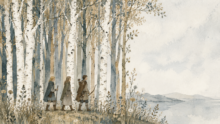

He Kept Waiting for the Better Season
There once was a donkey who was certain the problem was the season he was living in.
Winter arrived, and he complained bitterly. The cold bit at his skin. The fields were bare. His straw was dry and dull. Surely Spring would be better.
When Spring finally came, the grass was fresh and green just as he had hoped. But along with the green fields came new work. There were loads to carry, furrows to walk, and long days of labor. Before long, the donkey was longing for Summer.
Summer arrived, bringing warmth and sunshine. Yet it also brought harvest season. The work became heavier. The days became longer. The donkey grew tired and wished for Autumn.
Autumn seemed promising at first. The air cooled. The leaves changed color. But now he was expected to carry apples, grapes, firewood, and provisions for the coming winter. The burden was greater than ever.
Exhausted, the donkey found himself wishing for Winter again.
And so he completed the entire circle of the year, only to end exactly where he began. The season had changed. The donkey had not.
The Restlessness That Follows Us
Most of us smile a little when we hear this fable because we recognize ourselves in it. Not necessarily in dramatic ways. More often in quiet ones.
We think, “Maybe I’ll feel better after the holidays.” Then the holidays end. “Maybe I’ll feel better when the weather changes.” The weather changes. “Maybe I’ll feel better once I catch up on sleep, finish this project, solve this health problem, move house, lose weight, retire, find answers.” Sometimes those things help. Sometimes they don’t. And that can be deeply confusing.
Yet many people discover that even when circumstances improve, the unsettled feeling remains.
When Every Season Feels Like Too Much
One of the most overlooked parts of fibromyalgia isn’t pain. It’s agitation. It’s the feeling of never quite being comfortable in your own skin. The sensation that something is wrong, even when nothing obvious is happening.
Many people with fibromyalgia describe feeling “wired but tired.” They are exhausted but unable to relax. They crave rest but struggle to feel restored. They long for quiet yet become overwhelmed by ordinary sounds, demands, and interruptions.
The donkey believed each season contained the answer to his discomfort. Many of us do something similar. We search for the circumstance that will finally make us feel at ease. But fibromyalgia often teaches a harder lesson: sometimes the discomfort isn’t coming from the season around us. It’s coming from a nervous system that has forgotten how to feel safe.
When the Alarm System Gets Stuck
Researchers now understand that fibromyalgia involves changes in how the brain and nervous system process information. This is often called central sensitization. Imagine the volume knob on a radio becoming stuck too high.
Pain signals become louder. Stress signals become louder. Noise, light, activity, and emotional demands can all feel bigger than they once did. At the same time, many people with fibromyalgia experience ongoing activation of the sympathetic nervous system—the body’s fight-or-flight response. The result isn’t simply pain. It’s vigilance. Restlessness. Irritability.
A feeling of always waiting for the next demand, the next symptom flare, the next thing that might go wrong. Poor sleep makes the cycle even harder to escape. When the brain doesn’t receive restorative sleep, emotional regulation becomes more difficult. Small frustrations feel larger. Ordinary decisions require more effort. The nervous system loses some of its ability to recover.
No wonder so many people feel unsettled. Their bodies are working overtime simply to maintain balance.
The Problem Was Never a Lack of Gratitude
The moral of the original fable tells us to be content with our lot. At first glance, that can sound a little harsh. As though the donkey’s problem was simply complaining too much. But viewed through the lens of chronic illness, a gentler interpretation emerges.
The donkey wasn’t lazy. He wasn’t weak. He wasn’t failing. He was exhausted. And exhausted creatures rarely see clearly. The same is true for us.
When your nervous system is overloaded, contentment becomes difficult—not because you’re ungrateful, but because your body is constantly scanning for relief. That isn’t a character flaw. It’s physiology.
Learning to Rest in the Season You’re In
The answer isn’t giving up hope. Nor is it pretending that pain, fatigue, and limitations are enjoyable. Instead, the invitation is much quieter.
What if peace doesn’t arrive when the season changes? What if it begins when the nervous system feels a little safer?
Sometimes that safety comes from reducing stimulation before you’re overwhelmed. Sometimes it comes from predictable routines. Sometimes it comes from rest taken early instead of rest taken after collapse. Sometimes it comes from speaking to yourself the way you would speak to a tired friend. None of these things are dramatic.
But nervous systems often heal through repetition rather than heroics. The donkey spent an entire year searching for a better season. Perhaps the wiser path is learning how to care for ourselves inside the season we’re already living.
The weather may not change today. The symptoms may not disappear tomorrow. But a nervous system that feels even slightly safer can experience the very same season differently.
And sometimes that is where peace begins.
