


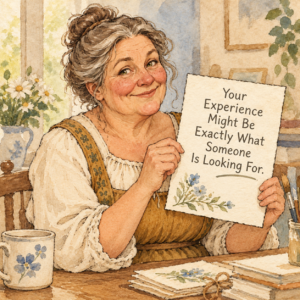
Your experience may be worth more than you think, and a business built around your real life can be worth exploring.
You may have spent years doing something so well that other people assume it comes naturally. You fix their photographs, tidy their writing, make lovely greeting cards, or explain computer problems without first making them feel foolish. Then someone says, “You ought to charge for that,” and the idea follows you home. Could you earn something of your own? Could an ordinary kitchen table become a place where useful work happens, perhaps between breakfast and the laundry?
The excitement is followed almost immediately by practical questions. Chronic illness doesn’t always allow reliable mornings, much less a full calendar of appointments. You don’t want to disappoint customers, waste money you can’t replace, or turn an enjoyable talent into another obligation. And the internet is full of experts insisting that successful entrepreneurs begin work before sunrise. I’d like to know whether these people have ever tried negotiating with a stiff back before getting their socks on.
Start with what people already value
Experience isn’t a consolation prize for having passed your fortieth birthday. It’s a collection of useful observations, mistakes survived, and problems solved. You may know how to organize complicated information, make a room welcoming, teach a beginner, or create something beautiful with your hands. The question isn’t whether you have enough ambition. It’s whether a particular skill solves a problem someone would pay to have solved.
Begin with one possibility. Notice what people already ask you to do, then describe a small offer in plain language: “I’ll edit a two-page newsletter,” or “I’ll make three personalized cards.” Don’t build a catalog before discovering whether anyone wants the first item. A compliment from your sister is encouraging, but an actual customer is considerably better market research. Your sister, after all, may also admire your haircut when it looks like a frightened shrub.
Aesop’s horse knew where the value was
In The Horse and His Groom (Perry 319), a groom brushes his horse diligently while secretly stealing and selling its oats. The horse finally points out that if the groom really wants him looking splendid, a little more food and a little less grooming would be an excellent start. I admire the horse’s ability to spot a management problem without requesting a strategic retreat.

The groom was deliberately dishonest. Our modern temptation is less sinister but just as distracting: polishing the appearance of a business before giving it anything to live on. You can spend days choosing fonts, comparing platforms, and designing a logo for a product you’ve never offered. Meanwhile the actual work—and the woman doing it—go unfed. The horse isn’t arguing against ambition. He’s suggesting we stop confusing preparation with nourishment.
Give your good ideas a workable schedule
For people with ME/CFS, the CDC describes post-exertional malaise: symptoms can worsen after mental or physical effort, sometimes a day or two later. Pacing means learning individual limits and balancing activity and rest to reduce those flare-ups. Other chronic illnesses don’t necessarily follow the same pattern. The useful business lesson is to look beyond how much you can accomplish today and consider what the effort may cost tomorrow.
Try a modest two-week experiment. Make one sample, ask a potential buyer a question, or test how long a small order would take. Notice whether the activity leaves room for the rest of your day. Then design the offering accordingly. A digital guide made gradually may fit better than fixed appointments; a service might work with two bookings a month and generous delivery windows. Neither arrangement is automatically profitable. But choosing the structure yourself is one of the pleasures of being your own boss, particularly when your boss has finally learned not to schedule meetings during a flare.
Make one sale before building an empire
A first sale tells you more than twenty motivational videos. Offer one clear product or service, explain its price and delivery time, and see what happens. If someone buys it, learn how long fulfillment actually takes and whether you’d enjoy doing it again. If nobody does, ask whether the audience, price, or offering needs adjusting. That’s information, not a verdict on your talent.
Check the numbers before calling the proceeds profit. The Small Business Administration’s break-even approach subtracts the cost of each sale from its price, then asks how many sales cover your ongoing expenses. If a $15 card order costs $5 to produce and process, each sale contributes $10 toward fixed costs and your eventual earnings. You still must account for the time involved. If you receive disability-related benefits, check your specific program’s self-employment and reporting rules before relying on income; an unexpected benefits letter can ruin a perfectly nice Thursday.
Women’s Entrepreneurship Day on November 19 celebrates women who build businesses. I hope we remember the woman testing her first idea at the kitchen table, too. She may never want employees, a warehouse, or a business coach with a headset. Perhaps she wants a few customers, more choice over her money, a satisfying reason to open her notebook, and enough energy left to enjoy supper. That isn’t a lesser ambition. It’s a business with the horse properly fed.
🐎 What skill or pleasure of yours might become a small, paying venture if you started with one customer instead of an entire business empire? Answer below ✍️
🌿 You Might Also Enjoy
How to Find Purpose After Your Role in Life Changes. Your old responsibilities may have changed, but the abilities and experience you gained haven’t disappeared. Discover how familiar strengths can open doors to new interests, opportunities, and a renewed sense of purpose.
The Five-Minute Version Still Counts. You don’t need endless energy or uninterrupted afternoons to do something worthwhile. Sometimes a few enjoyable, productive minutes are enough to keep something meaningful growing.
🌿 More Stories for the Life You’re Living
Life changes, sometimes dramatically and sometimes one bewildering little inconvenience at a time.
Join From The Fables for a monthly letter filled with timeless stories, practical wisdom, and a little humor about navigating life’s changes.
And there’s a welcome gift! You’ll receive a free copy of Best I Can Do Is a Mustache, our 40-page illustrated, irreverent look at menopause and its many surprises.