

When you can’t always accept invitations, friends may stop asking. But a changing life doesn’t mean you’ve stopped wanting to belong.
The photographs appear on Facebook the following morning. Six familiar faces around a restaurant table, somebody laughing with her eyes closed, a birthday cake bristling with candles. You recognize everyone. You’ve known some of them for years. And somewhere between admiring the cake and wondering who ordered the enormous margarita, you realize nobody thought to invite you.
Perhaps you’ve declined the last three invitations. Perhaps you’ve canceled twice because your body changed its mind after you’d already washed your hair. You aren’t even sure you could have gone this time. But you would have liked the chance to decide. Apparently, after enough refusals, your friends can form an unofficial committee to manage your social life without consulting you. Nobody takes minutes, but the decisions are binding.
When No Becomes Your Reputation
There was a time when accepting a lunch invitation involved checking your calendar and finding clean trousers. Now it can require predicting how you’ll feel three Thursdays from now, whether you’ll have transportation, and whether the restaurant has chairs designed for actual human backs. I can barely predict what I want for breakfast tomorrow. Yet apparently I’m expected to forecast my available energy with the accuracy of the National Weather Service.
Sometimes it’s illness or pain. Sometimes it’s money, grief, caregiving, or simply a life that no longer runs on the old timetable. Friends may be trying to be considerate when they stop asking. They don’t want to pressure you, watch you apologize again, or arrange a table for someone who might not arrive.
So you protect your energy, they protect your feelings, and everybody ends up protecting you right out of the friendship. It’s an impressive amount of kindness to produce such a lonely result.
Meanwhile, you still want to hear about the birthday, admire the grandchildren, and find out why everyone has suddenly decided that forty dollars is a reasonable price for lunch. Your capacity has changed. Your curiosity hasn’t.
The Fox Had a Dinner Party Problem
In Aesop’s The Fox and the Stork (Perry 426), the Fox invites the Stork to dinner and serves soup in a shallow dish. He laps it up easily while she struggles with her long beak. Later, she invites him over and serves food in a tall, narrow-necked jar. He can’t reach a mouthful.
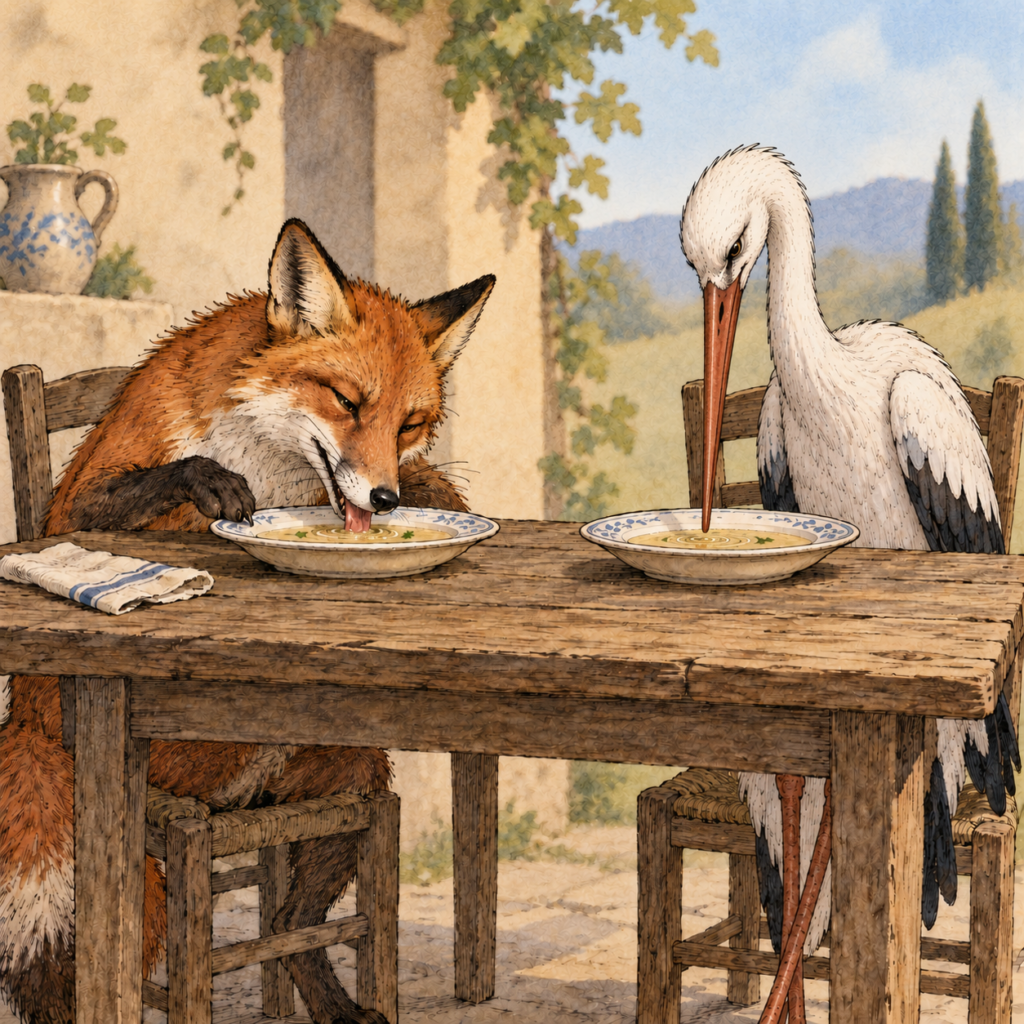
The traditional lesson is about giving people the treatment you would want yourself. But I have another complaint about this pair. Neither one appears to have given a moment’s thought to whether the guest could actually eat. They were so busy proving a point that nobody enjoyed dinner.
We do something similar, usually without the revenge. A six-hour shopping trip may be beyond someone’s stamina; a noisy restaurant may be impossible for someone sensitive to sound. But an hour at a quiet café, dessert after the main event, or a visit at home might be lovely. Inclusion isn’t always asking someone to try harder. Sometimes it’s finding a different-sized dish.
Why It Hurts Even When You Would Have Stayed Home
Social isolation and loneliness aren’t quite the same thing. Isolation describes having relatively little contact or support. Loneliness is the distress of feeling less connected than you want to be. You can have a wonderful afternoon alone with a book and a cup of tea. You can also have a phone full of names and feel nobody would notice if you disappeared from the group photograph.
Research summarized by the CDC links loneliness and social isolation with poorer health. That doesn’t mean one missed party damages your health, and it certainly isn’t an instruction to exhaust yourself collecting social engagements. The useful point is simpler: relationships matter, and having some say in them matters too.
There’s a difference between choosing to stay home and discovering that everybody else has chosen for you. Women already adjusting to retirement, limited mobility, changed finances, or reduced energy shouldn’t automatically lose the right to answer their own invitations.
Give Your Friends Something Better Than a Guess
If you’ve said no repeatedly, a friend may honestly assume you want to be left alone. Tell her otherwise before the unofficial committee meets again.
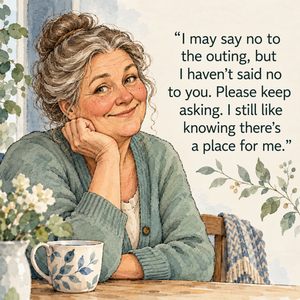
Try: “I know I’ve turned down a lot of invitations, but please keep asking. Some days I can manage lunch; other days I consider matching socks a major accomplishment. I still want to see you.”
Then say what makes a yes possible. Mornings instead of evenings? A nearby place? Forty minutes rather than four hours? If you need an exit plan, arrange one. And don’t promise a definite yes when you’re offering a hopeful maybe. “I’d love to come if I can, but please don’t count me for reservations” respects everyone’s plans, including yours.
If you’re the one inviting, say, “We’d love to see you Saturday if it works. No pressure if it doesn’t.” Then resist greeting her next appearance with “Look who finally showed up!” She’s a friend, not a delinquent employee reporting to human resources.
Leave a Place at the Table
Friendship may need a smaller format. Sandwiches at home instead of a dinner party. A phone call instead of an outing. A photograph of the dreadful sofa your friend is considering, followed by the kind of candid opinion only an old friend can give. These aren’t lesser friendships. They’re friendships learning new arrangements.
Not everyone will adapt. Some people are delightful companions until their plans require adjusting, and you may have to grieve that. But others simply need to know that your affection hasn’t vanished along with your stamina.
I don’t need a standing ovation because I made it to lunch. I don’t need an interrogation when I can’t. I’d just like the occasional invitation and the courtesy of answering it myself.
We still belong at the table, even on the days we can’t reach it.
💌 One Last Thing to Ponder…What would you want a friend to understand about the times you have to say no?
🌿 You Might Also Enjoy
Why Do I Need to Recover From Seeing People I Like? Enjoying someone’s company doesn’t always mean having the energy to socialize without consequences. Sometimes we need recovery time even after the visits we genuinely enjoyed.
Leave Before You’re Empty. Sometimes the best way to stay connected is to recognize your limits before exhaustion takes over. A shorter visit can still be a meaningful one.
🌿 More Stories for the Life You’re Living
Life changes, sometimes dramatically and sometimes one bewildering little inconvenience at a time.
Join From The Fables for a monthly letter filled with timeless stories, practical wisdom, and a little humor about navigating life’s changes.
And there’s a welcome gift! You’ll receive a free copy of Best I Can Do Is a Mustache, our illustrated, irreverent look at menopause and its many surprises.
GET MY FREE BOOK & MONTHLY LETTER