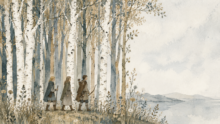

A Small Creature Asks For More
Some gifts arrive wrapped in warning. The bee did not know that. The hive buzzed with summer work. Bees came and went, carrying pollen and nectar, building something sweet from thousands of tiny efforts. Yet not everyone respected their labor. Honey was taken. The hive was disturbed. The bee grew angry. She only knew she was tired. Tired of watching others take what she had worked for. Tired of feeling small. Tired of having no way to defend herself.
One day she flew to Jupiter and made a request. “Give me a weapon,” she said.
Jupiter listened. Then he granted her wish. He gave her a sharp stinger—a way to fight back, a way to protect what was hers. But the gift came with a condition. If the bee used the stinger, she would die. The bee flew away pleased with her new power. Whether she understood the cost is another question.
When More Sounds Like The Answer
Most of us do not ask Jupiter for stingers. But we do ask for other things. More structure. More energy. More responsibility. More purpose. More ways to finally get life under control.
The request usually comes from a good place. We are trying to solve a problem. We are trying to feel better. We are trying to become the version of ourselves we think we should be. And often, like the bee, we focus so much on what we might gain that we never stop to ask what it might cost.
The Season When More Landed On My Shoulders
Years ago, my daughter and grandson decided I would be happier if I had more to do. They meant well. They looked at my life and saw someone who was struggling. Their solution was structure. Tasks. Expectations. A schedule.
Without asking me, they assigned chores. Some were daily. Some were weekly. To keep track of them, they used an app normally designed for parents managing children’s responsibilities.
At an age when I had raised children, paid bills, survived marriages, losses, illnesses, and decades of adult life, I suddenly found myself being managed. The shame was difficult to explain. Some days went reasonably well. Other days did not.
The expectations piled up faster than my body could meet them. My brain fog thickened. Pain climbed. I would become drenched in sweat from the sheer overload of trying to keep up.Then sleep became difficult, which made the next day harder, which made the next day harder still.
What was intended as help became another burden to carry. One of many bricks that eventually paved the road toward hospitalization. No one intended that outcome.
But intentions and consequences are not always the same thing.
The Body Keeps The Receipt
One reason this happens is that the nervous system cares less about good intentions than it does about demands. When the brain perceives pressure, expectation, loss of control, or constant monitoring, it activates stress responses designed to help us cope.
For a healthy system, that activation may be temporary. For people living with fibromyalgia, chronic pain, chronic illness, grief, burnout, or prolonged stress, the response can become much louder. The body begins spending energy preparing for demands before the demands even arrive.
Sleep becomes lighter. Pain becomes sharper. Thinking becomes harder. Tasks that seem small on paper can feel enormous in practice. It is not laziness. It is not weakness. It is biology responding to load.
The bee’s stinger looked like power. The body, however, would have recognized the cost immediately.
What Support Actually Feels Like
For years I thought the lesson was that I needed to try harder. Many of us do. If something isn’t working, we assume we must be the problem. But age has taught me a different possibility.
Sometimes the problem is not effort. Sometimes the problem is that we are carrying something that was never ours to carry. Support should feel supportive. Not controlling. Not shaming. Not exhausting.
Real support leaves room for consent. It leaves room for capacity. It leaves room for the fact that a body can have limits without being broken.
The people who love us may not always understand those limits. Sometimes we don’t understand them ourselves. But respecting them is not surrender. It is wisdom.
The Weight Hidden Inside The Gift
I still think about that bee. She asked for power because she believed power would solve her problem. Maybe she imagined herself safer. Stronger. More capable.
What she could not see was that every gift carries responsibility, and every solution carries consequences. The question is not whether we should ask for help, structure, strength, or change. The question is whether we are paying attention to the weight that comes with them.
Because sometimes the wisest thing we can do is not ask for more.
Sometimes the wisest thing we can do is protect what little energy we already have.
And sometimes the greatest gift is not the stinger at all. It is knowing when not to use it.
