
Learning While Limping
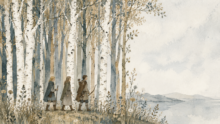
The old Toad had become known throughout the woods as a doctor.
He spoke confidently about herbs, remedies, and cures. Animals arrived hoping he could relieve aching joints, tired limbs, and mysterious ailments that had lingered far too long.
One afternoon a Fox stopped to listen. The Fox looked carefully at the old Toad before saying, “If you’re such a remarkable physician, why haven’t you cured yourself?”
The Toad’s skin was blotched. His movements were slow and stiff. Every few steps carried the unmistakable shuffle of someone whose body hurt.
The other animals grew quiet. The Fox walked away believing he had exposed a fraud. Aesop’s moral is simple: “Those who would mend others should first mend themselves.”
It’s a neat lesson. Life, however, is rarely so neat.
When Experience Becomes the Teacher
For those of us living with fibromyalgia or another chronic illness, this fable lands a little differently.
Many of us have spent years reading research papers, experimenting with nutrition, adjusting our routines, trying medications, learning to pace ourselves, and discovering tiny changes that make difficult days a little easier.
None of that has cured us. But it has taught us something. If we waited until we were completely well before sharing what we’ve learned, many of us would remain silent forever.
Sometimes the people with the deepest understanding are not the ones standing outside the illness.
They’re the ones quietly living inside it every single day.
An Illness Older Than Its Name
One reason fibromyalgia has been so misunderstood is that its name is surprisingly young. The condition is not.
Long before anyone used the word fibromyalgia, physicians were describing patients who complained of widespread aching, profound fatigue, disturbed sleep, stiffness, and pain that couldn’t be explained by damaged joints or inflamed muscles.
In the early 1800s these patients were often said to have muscular rheumatism.
By 1904, British neurologist Sir William Gowers introduced the term fibrositis, believing inflammation in connective tissue explained the symptoms. We now know inflammation wasn’t the driving cause, but the people themselves were unmistakably real.
Throughout the nineteenth and early twentieth centuries, doctors continued documenting patients whose pain spread throughout the body, whose sleep never refreshed them, and whose exhaustion far exceeded what others expected.
The bodies existed. The suffering existed. Medicine simply hadn’t yet found the right explanation.
It wasn’t until 1976 that the term fibromyalgia entered medical language, and not until 1990 that formal diagnostic criteria helped physicians recognize it as a distinct syndrome.
The illness didn’t suddenly appear. It finally received a name.
More Than Muscles
Today we understand fibromyalgia very differently than doctors did a century ago. Rather than injured muscles refusing to heal, researchers now believe the nervous system itself has become unusually sensitive.
The brain and spinal cord amplify ordinary sensations until they feel painful. Signals that should be quiet become loud. Sleep loses its restorative power. Fatigue settles deep into the body because the nervous system is constantly working harder than it should.
Nothing about this means the pain is imaginary. It means the body’s alarm system has become overly protective.
Knowing this doesn’t make the pain disappear. But it can remove one heavy burden.
Self-blame.
Wisdom Doesn’t Require a Cure
Perhaps that’s where I part company with the Fox. The Fox assumed a person who still suffered had nothing worth teaching.
I think the opposite may sometimes be true. I don’t write these reflections because I’ve solved fibromyalgia. I haven’t.
I still have mornings when getting dressed feels like climbing a hill. I still pace my energy, rethink my plans, and learn new lessons my body insists on teaching me.
But nearly four decades of living with fibromyalgia have shown me things no textbook ever could. I’ve learned that rest is not laziness. That gentleness often accomplishes more than force. That believing someone’s pain may be the beginning of healing, even when we cannot remove it.
I’m not offering cures. I’m offering companionship.
If something I’ve learned shortens someone else’s search, helps them feel believed, or reminds them they aren’t failing, then perhaps the old Toad had something worthwhile after all.
Not because he could heal himself.
But because he understood what it meant to hurt.
