
Not Every Open Door Becomes A Refuge
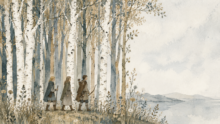
The hare was proud of how many friends he had. There was the horse, swift enough to outrun almost anything. The bull, powerful enough to frighten most dangers away. The goat, clever and sure-footed among the rocks. The hare believed himself fortunate. Wherever he went, someone greeted him warmly. He never doubted that, should trouble come, one of them would surely help.
Then one autumn morning, the hunting dogs appeared. The hare bolted through the woods until he reached the horse.
“Please,” he begged, breathing hard. “Carry me away before the hounds catch me.”
The horse lowered his head apologetically. “I would,” he said, “but I must be elsewhere today. Ask the bull. He is stronger than I.”
The hare ran to the bull. The bull listened, then shook his great head. “I wish I could,” he said, “but I have responsibilities here. Perhaps the goat can help.”
The hare found the goat on a rocky hillside. The goat looked at the approaching dogs and sighed. “You know I’d like to help,” he said. “But you would only slow me down.”
The hare ran on alone. The old fable leaves him there, disappearing into the trees with no comforting ending. It simply lets the silence speak.
Sometimes, that is enough.
When Life Stops Being Convenient
Chronic illness has a curious way of introducing us to this old story. Before fibromyalgia, before chronic fatigue, before migraines, autoimmune disease, food sensitivities, or grief, friendship often feels effortless. We meet for lunch. We answer texts quickly. We say yes to invitations. We become the reliable one.
Then life changes.
Suddenly we cancel plans because standing in the shower took more energy than we expected. We leave early because our nervous system has had enough. We decline trips, birthdays, holidays, even simple coffee dates.
Most people understand—at least at first. But chronic illness is rarely a short story. Weeks become months. Months become years. Eventually some friendships begin to drift, not through cruelty but through discomfort. Healthy lives keep moving. Ours sometimes move at the pace of recovery.
Like the hare, we slowly discover which friendships were built for ordinary days—and which can survive difficult ones.
The Friendship You Didn’t Mean to Test
One of the hardest parts of chronic illness is realizing that your illness quietly tests every relationship around you. Not because you’re asking people to solve your problems. Simply because your life no longer works the way it once did.
Some friends grow tired of hearing “Maybe next time.” Others stop inviting you altogether because they assume you’ll say no. A few become uncomfortable with suffering they cannot fix. And then there are the rare ones.
The friend who brings soup without expecting conversation. The one who sends a funny text after you’ve disappeared for two weeks. The one who remembers that your silence probably means you’re exhausted—not uninterested.
Those friendships become astonishingly precious. Not because they’re perfect. Because they’re steady.
Why Our Brains Notice the Ones Who Leave
Living with chronic illness doesn’t just affect muscles and joints. It affects the nervous system. Fibromyalgia is now understood as a condition involving central sensitization, where the brain becomes unusually responsive to signals from the body. Pain becomes louder. Fatigue becomes deeper. Everyday stress can feel physically overwhelming.
The nervous system also pays close attention to relationships. When people withdraw, cancel, criticize, or stop believing us, the brain often registers those experiences as threats. Social rejection activates many of the same brain networks involved in physical pain. That’s one reason losing friendships can hurt so profoundly.
You’re not “too sensitive.” Your nervous system is responding exactly as human nervous systems were designed to respond. For thousands of years, belonging meant survival. No wonder isolation feels heavy.
A Smaller Circle Isn’t Always a Smaller Life
The hare believed his wealth was measured by how many friends surrounded him. Perhaps he counted the wrong thing. Chronic illness often shrinks our world. Our calendars become emptier. Our social circles become smaller. Our lives become quieter. At first, it feels like loss. Sometimes it is.
But over time, something unexpected can happen. The friendships that remain become deeper than dozens of casual acquaintances ever could have been. You stop performing wellness. You stop apologizing for resting. You stop pretending you’ll “feel better tomorrow” just to make someone comfortable.
The people who stay begin loving the person you actually are—not the energetic version you keep trying to resurrect. That is a rarer gift than having many friends.
The Quiet Measure of Friendship
Perhaps the old fable was never warning us against having many friends. Perhaps it was inviting us to stop confusing familiarity with refuge.
Not everyone can walk beside suffering. Not everyone knows what to do with limitation. That doesn’t always make them bad people. It simply means they cannot offer what they do not possess.
The friends worth holding close are rarely the loudest, funniest, busiest, or most impressive. They’re the ones who quietly remain when your life becomes less convenient.
Like so many old fables, the lesson isn’t about losing people. It’s about finally recognizing the ones who never planned to leave.
