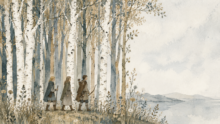

The Farmer and the Viper
A farmer was crossing his fields on a bitterly cold day when he found a viper lying in the snow. The snake had been overcome by the cold and was curled so tightly that it barely seemed alive. The farmer stopped to look at it. He knew perfectly well what sort of creature it was, but pity has a remarkable ability to make perfectly sensible information temporarily inconvenient.
He picked up the viper and carried it home. Inside his cottage, the farmer settled near the fire and began warming the frozen snake. Little by little, the heat reached it. The stiff coil loosened. The snake began to move. Its head lifted. What had looked almost dead was very much alive after all.
Then the viper bit him.
As the venom began to take effect, the farmer understood what his kindness had failed to change. The cold had made the snake helpless. It had not made the snake something other than a snake. The circumstances had changed what he could see. They had not changed what was underneath.
October Rarely Waits for October
The October Slide has never shown much respect for the calendar either. I would appreciate a clear starting date. October 1 would be tidy. Perhaps my body could send a memo the week before: Seasonal nonsense begins Monday. Please adjust expectations accordingly.
Instead, the first signs usually arrive while I am still insisting that nothing has changed. The afternoons may still be warm. There may be no dramatic cold front and certainly no picturesque pile of orange leaves waiting outside my door. Yet mornings start taking more effort. Sleep gets slightly strange. An ordinary outing costs more than it did a few weeks earlier. Fatigue that used to leave after a reasonable amount of rest begins behaving as though it has signed a lease.
At first, every change has an explanation. I slept badly. I did too much. I sat too long. I talked too much. I went outside while the sun was apparently trying to kill everyone personally. There is always something. Then several of these little things begin happening together, and I realize autumn has been in the room for a while.
My body noticed it before I did.
The Light Changes First
We tend to think about seasons in terms of temperature. Summer is hot. Winter is cold. Autumn is when every shop decides cinnamon is a personality.
The body is paying attention to more than the thermometer. Daylight begins changing long before the weather feels dramatically different. Sunrise shifts. Evening arrives earlier. The amount and timing of light reaching our eyes changes, and light is one of the signals the brain uses to keep our internal daily clock on schedule.
Scientists call that system the circadian rhythm. I think of it as the body’s clock, although mine occasionally seems to have been purchased at a yard sale.
That clock helps organize sleep and wakefulness along with daily patterns in body temperature and hormones. So the season does not have to turn properly cold before the body has received information that something is changing.
That does not mean shorter autumn days have been proven to cause the October Slide in everyone with fibromyalgia. They have not. Research on fibromyalgia and seasonal changes is mixed. Some studies find little seasonal difference, while others find modest changes in symptoms during certain parts of the year.
Which sounds suspiciously like fibromyalgia. Give researchers five hundred people with the same diagnosis and fibromyalgia will promptly demonstrate five hundred different ways to be inconvenient.
Weather Refuses to Follow One Rule
People with fibromyalgia have been saying for years that weather affects them. I know it affects me. Science has had a harder time finding one neat weather rule that applies to all of us.
Researchers have looked at temperature, humidity, barometric pressure, sunshine and almost everything else the sky can throw at a human body. The results are inconsistent. Some people with fibromyalgia seem quite sensitive to weather changes. Others barely notice them. One person dreads cold damp days; another finds heat far worse.
There is also research suggesting that some of us experience hot and cold differently. Researchers test this by applying carefully controlled warmth or cold to a small area of skin and asking when the person notices it and when it becomes uncomfortable or painful. People with fibromyalgia often respond differently from people without it.
That does not give us a tidy explanation for why one cool evening leaves me digging out another blanket while somebody else announces that the weather is refreshing. It simply suggests that the temperature-control department may already be staffed by people who were hired during an emergency and never properly trained.
Six Small Things Will Do
The October Slide may be difficult to pin down because there may not be one culprit. Changing light, cooler nights, altered sleep, temperature sensitivity, different activity patterns and shorter days may all be adding their small contribution.
Fibromyalgia has never required a major catastrophe when six minor inconveniences will do.
That is why the beginning can be easy to miss. We keep looking for the event. What happened? What did I do? Why am I suddenly this tired?
Sometimes nothing dramatic happened. The conditions changed.
I have learned to pay attention when the small clues begin traveling in groups. One poor night’s sleep means very little. One tired afternoon is simply a tired afternoon. Bodies are allowed to have Tuesdays. But when sleep wanders for several nights, mornings become noticeably harder, and ordinary activities begin charging me higher prices, I notice.
The sentence that usually catches me is, Why am I this tired? I haven’t done anything.
Years ago, I treated that as evidence that my body was being unreasonable. Now I treat it as information.
My Body Does Not Own a Calendar
The farmer judged the viper by the condition he could see. The snake looked harmless because the cold had changed its behavior. What he saw was real, but it was temporary.
We can make the opposite mistake with ourselves. September still looks enough like summer that we expect our bodies to behave exactly as they did in August. Then we are surprised when they don’t.
I no longer need October 1 to give me permission to notice what my body is doing. If sleep changes, I notice. If recovery takes longer, I notice. If my available energy quietly gets smaller, I notice that too.
Recognizing the October Slide does not mean I can stop it. If awareness cured fibromyalgia, some of us would have been insufferably healthy years ago. But recognition can remove some of the mystery.
The light changed. The nights changed. My sleep changed. My energy changed.
And perhaps my body noticed autumn before I did.
Reflection Question: 🍂 What is the first small change that tells you autumn has reached your body?