

When your body changes the rules, making everyday life easier isn’t cheating. Sometimes the smartest way to keep doing what matters is to stop doing everything the hard way.
The grocery bags are cutting into your fingers, the laundry basket is heavier than it has any right to be, and you’re standing in the kitchen wondering whether dinner is worth another half hour on your feet. You know there are easier ways. You could have groceries delivered, divide the laundry into smaller loads, or sit down to chop the vegetables. Yet a stubborn little voice keeps insisting, “I should still be able to do this.”
Maybe you can. That’s not quite the same as saying you should. Getting a job done is one thing; getting it done without spending tomorrow recovering is another. Women accustomed to managing everybody else’s emergencies can be reluctant to make their own lives easier. We call it independence, but sometimes it’s an expensive demonstration for an audience that isn’t even watching.
The Trouble with Proving a Point
Part of the resistance is habit. We learned to carry everything in one trip, cook from scratch, keep a tidy home, and say, “No, thank you, I’ve got it.” Those habits once served us. But pain, fatigue, or slower recovery change the calculation. A task that used to cost ten minutes may now cost an hour, plus whatever it takes to feel human again.
There’s also the matter of pride, which isn’t entirely foolish. Doing things for ourselves can give us confidence and pleasure. Nobody wants to be treated as incapable because she uses a cane or asks someone to carry a box. But genuine independence is having some say in how your day unfolds. It isn’t a requirement to wrestle the vacuum cleaner across every inch of carpet personally.
An Old Man with Excellent Timing
Aesop’s The Old Man and Death (Perry 60) introduces a weary fellow trudging along with a heavy bundle of sticks. Eventually, he drops the bundle and calls for Death, having thoroughly had enough. Death obligingly appears and asks what he wants. Faced with an actual visitor, the old man changes his request: would Death mind helping him lift the sticks back onto his shoulders?
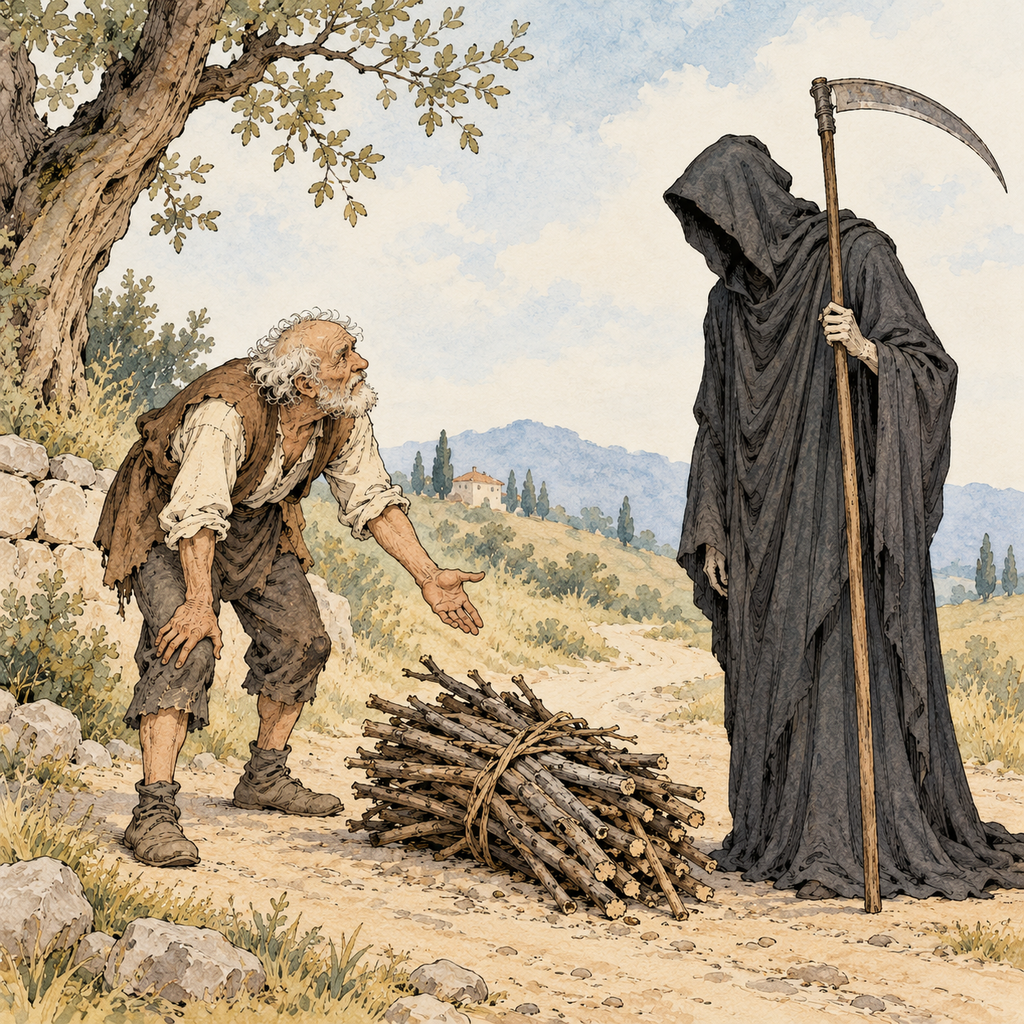
The traditional fable is about our attachment to life, even when life is difficult. Fair enough. But I rather admire the old man’s practical streak. When help appeared, he found a use for it. He didn’t give Death a speech about his lifelong commitment to lifting things unaided. He asked him to pick up the blasted sticks.
Mind you, our fellow might have been even better off asking for a wheelbarrow. Which brings us to the surprisingly sensible business of conserving energy.
Energy Is for Living, Not Just Finishing Chores
Occupational therapists use strategies called energy conservation and activity pacing to help people manage everyday demands. The basic idea isn’t to do nothing. It’s to plan tasks, reduce unnecessary effort, change positions, use equipment, and take breaks before the tank is empty. Research on fatigue management across chronic conditions suggests these approaches can help some people, although results vary and they aren’t cures.
Think about what happens after an ordinary chore. Perhaps you manage to clean the bathroom, but then skip a walk, a telephone call, baking peanut butter cookies, or the hobby you were looking forward to. The bathroom shines; the rest of your afternoon disappears. That is a poor bargain, especially when a lighter tool, a different routine, or an extra pair of hands could have changed the outcome.
And no, this doesn’t mean avoiding every challenging activity. Movement and strength still matter, within your abilities and any medical guidance you need. The point is to stop confusing useful activity with needless strain. Carrying a heavy basket to prove you can is not automatically better for you than using a rolling cart.
Let the House Do Some of the Work
Start where you regularly lose the most energy. If standing to prepare meals is exhausting, put a sturdy chair or suitable kitchen stool where you work, and prepare ingredients in stages. If bending hurts, keep frequently used items between waist and shoulder height. A long-handled reacher, lightweight cookware, or a rolling laundry hamper may save repeated effort. Choose equipment that is stable and appropriate for your balance and mobility.
Then look at the jobs themselves. Frozen chopped vegetables are still vegetables (I have a freezer full). A grocery pickup order still puts food in the refrigerator. Cleaning one room today and another tomorrow is still cleaning. If you can afford paid help, use it where it matters most. If money is tight, begin with free changes: sit instead of stand, split loads, rearrange shelves, or ask a friend to help move something heavy.
Safety deserves its own vote. Grab bars properly installed near a shower or toilet can reduce fall hazards; a towel rail is not a substitute. If you’re unsure which tools or adaptations fit your needs, an occupational therapist can assess the way you actually live and help you choose. No need to buy gadgets blindly.
Make a Better Bargain with Yourself
Try asking three questions before the next demanding job: Does this truly need doing? Must I be the one to do it? Is there a simpler or safer way? Those questions are not admissions of defeat. They’re how you protect your time and attention for the things that make the work worthwhile in the first place.
It can help to choose one task this week and change just one part of it. Notice whether the change saves effort, reduces discomfort, or leaves you with more energy afterward. Keep what works; abandon what doesn’t. Adaptation isn’t a personality test, and the right solution may change from one day to the next.
The old man still wanted to get home with his firewood. I hope he did. I also hope that on his next trip, he took fewer sticks, found a cart, or persuaded somebody with stronger shoulders to join him. There was never a medal waiting at the end of that road, only the rest of his life.
💀 And Here’s Where You Come In…What is one everyday task you could make easier without giving up anything that truly matters?
🌿 You Might Also Enjoy
Maybe Today Is a 60 Percent Day. Some days, doing less isn’t a failure. It’s a sensible response to the energy you actually have, rather than the energy you wish you had.
The Five-Minute Version Still Counts. Making something easier or doing a smaller version doesn’t make the effort meaningless. Sometimes adapting the task is precisely what allows you to keep enjoying it.
🌿 More Stories for the Life You’re Living
Life changes, sometimes dramatically and sometimes one bewildering little inconvenience at a time.
Join From The Fables for a monthly letter filled with timeless stories, practical wisdom, and a little humor about navigating life’s changes.
And there’s a welcome gift! You’ll receive a free copy of Best I Can Do Is a Mustache, our illustrated, irreverent look at menopause and its many surprises.
GET MY FREE BOOK & MONTHLY LETTER