

You see a woman at the supermarket apparently negotiating with a cantaloupe, and immediately think of the person who would have appreciated a full report. You can almost hear the response: “Well, what did the cantaloupe say?” You’re halfway through composing the story before remembering that the person isn’t there to hear it. Life can throw a major upheaval at you, and you somehow manage the paperwork and practical decisions. Then a piece of fruit catches you completely off guard.
It’s not that you have nobody to talk to. There may be friends, neighbors, relatives, and a telephone that rings whenever someone wants to discuss your car’s extended warranty. What you miss is the person who understood the running commentary of your life. You could start a story in the middle, mention a name without providing a family tree, or raise one eyebrow and communicate an entire opinion. When that person is gone, where do all those unfinished conversations go?
The Language Nobody Else Speaks
Long relationships invent their own dictionaries. An accidentally mangled song lyric becomes the official name of something in the house. Someone ruins a load of laundry, and an outraged relative declares, “This is the worst thing you’ve ever done.” Twenty years later the same verdict is delivered when somebody spills water on the counter. Everyone laughs, although no outsider could explain why.
Those jokes aren’t necessarily the grand memories we expect to miss. They come from ordinary Tuesdays when nothing important happened, except that two people noticed the same absurdity. One look across the room could mean, “Please don’t let him tell that story again.” It’s remarkably efficient communication, especially compared with trying to explain yourself to the telephone company.
And then the joke is still there, but the other person isn’t. This happens after death, certainly, but also after divorce or the end of a close friendship. You may miss the laughter without wanting the relationship back. That’s a complication nobody mentions when they suggest you should simply make some new friends.
When the Music Brought Everything Back
I accompanied a friend to hear her husband play in a country-and-western band. I knew that world well: I had once been the wife of a band member myself.
Then I watched people approach my friend with the familiar acknowledgment given to a musician’s wife. I remembered receiving it. Her husband was playing the same instrument my late husband had played, and suddenly I wasn’t simply listening to music. I was watching a life I had once belonged to, continuing in front of me without me in it.
It hurt in a way I hadn’t expected. I was looking at a familiar world from a place I’d never occupied before, and I recognized so much of what I’d lost. I doubt I’ll go hear live music again anytime soon. The evening taught me something a well-meaning invitation cannot always anticipate: you can miss a place in the world and still be unable to bear visiting it.
The Nightingale Chooses the Forest
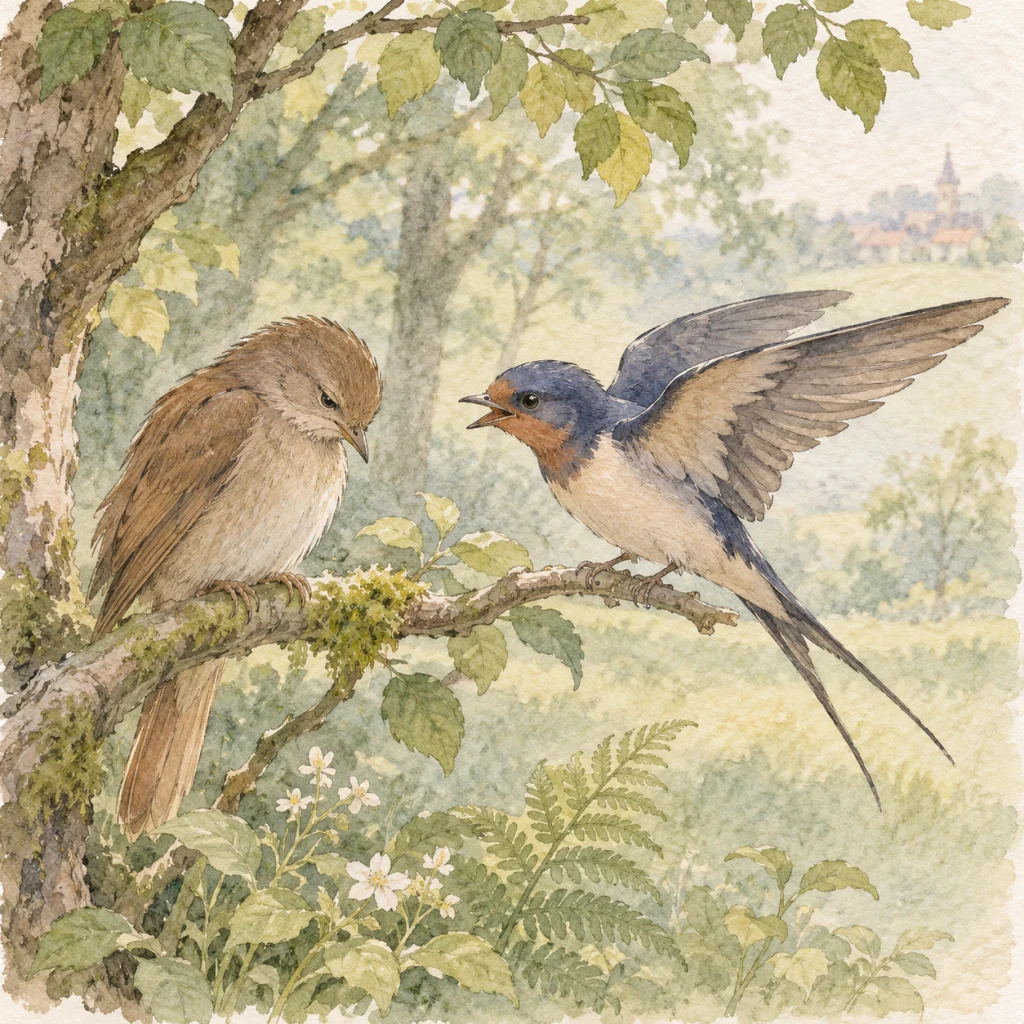
In Aesop’s The Nightingale and the Swallow (Perry #277), a swallow finds a nightingale singing sorrowfully in the woods. She is mourning her lost son. The birds recognize each other and greet one another warmly. The swallow thinks her old friend should come back near people. They could share a home, and the nightingale could sing for an appreciative audience. A lovely offer, surely.
But the nightingale refuses. Homes and familiar places bring back memories of what happened to her. Staying in the forest hurts less than returning. The swallow can offer friendship, but she cannot make those memories disappear.
I understand that bird better now. At the moment, her forest sounds like a very good place to be. Sometimes people see a concert, a familiar neighborhood, or a reunion as a happy return. What they cannot see is everything you remember when you walk through the door. The same place can hold the best moments of your life and some you would rather never relive.
More Company Is Not the Same as Being Known
There is a difference between having people around and feeling connected. You can enjoy an afternoon with friends and still think, on the way home, of the one person who would have understood your account of it. You might even be surprised that you laughed all evening and still came home sad. Both experiences can be true.
We often offer lonely people more activities, as though friendship were measured by the number of squares filled on a calendar. But being known takes repeated, ordinary exchanges. The new friend won’t understand Harold the hideous lamp on the first telling. The second time, she might ask whether Harold has finally been retired. That is how a little shared history begins.
You can encourage that without demanding too much of yourself. Send a photograph of something ridiculous. Have a short weekly call with someone whose company you enjoy. If leaving home is exhausting, expensive, or emotionally difficult, you don’t have to turn conversation into an outing. A ten-minute chat still counts.
And keep the old language if you want to. Use the phrases, remember the jokes, write down the stories. Or leave some of them alone because they hurt. There is no obligation to revisit painful places just to prove you are recovering properly.
There Is Still Room for Another Story
I think the nightingale was wise to know the difference between company and comfort. Her forest wasn’t a rejection of every friendship. It was the place she could live with her memories without having them thrust upon her.
Perhaps another listener will never understand all the old jokes. She might, however, hear the cantaloupe story and tell you about something even more ridiculous she saw at the store. Neither of you will know yet whether it will become a running joke. That’s the lovely part: it might.
🍈 Is there a little story you’ve been saving for someone who isn’t there, and is there another person you’d like to tell it to?
🌿 You Might Also Enjoy
Please Invite Me Even If I Usually Say No. Sometimes you want to belong even when getting together isn’t easy. Why being included still matters when life has changed your ability to say yes.
How to Stop Measuring Your Life by What You’ve Lost. When the past keeps winning every comparison, perhaps it’s time to reconsider how you’re measuring the life you have now.
🌿 More Stories for the Life You’re Living
Life changes, sometimes dramatically and sometimes one bewildering little inconvenience at a time. Join From The Fables for a monthly letter filled with timeless stories, practical wisdom, and a little humor about navigating life’s changes. And there’s a welcome gift! You’ll receive a free copy of Best I Can Do Is a Mustache, our illustrated, irreverent look at menopause and its many surprises.