


They believe your diagnosis. What they haven’t understood is that your old responsibilities can’t simply carry on unchanged.
Your family knows you have a chronic illness. They’ve heard the diagnosis, seen you cancel plans, and perhaps driven you to medical appointments. Yet dinner is still your responsibility, the laundry still waits for you, and someone has volunteered you to make the potato salad for twelve. Apparently, the medical news reached everyone except the household chore department.
When you say you can’t manage, someone points out that you managed last Tuesday. Never mind that Tuesday cost you Wednesday, or that the shopping trip they remember ended with you lying down before you could put everything away. You explain yourself again, then feel guilty for asking anyone to change their plans. What hurts isn’t only the work. It’s the realization that your family believes you’re sick but continues expecting a healthy woman’s performance.
Your Best Day Is Not Your Job Description
Fibromyalgia can bring fluctuating pain, fatigue, poor sleep, and problems with concentration. Other chronic conditions create their own unpredictable limits. You might enjoy lunch with a friend and be unable to cook afterward. Your family sees the lunch; you live with its cost. A successful outing becomes evidence that you can manage another, as though your body issues weekly guarantees.
Years of family habits make matters worse. If you always cooked, remembered birthdays, and organized everyone else’s appointments, people stopped noticing those were jobs. They became simply what you did. An illness may change your capacity overnight while the family job descriptions remain twenty years out of date.
What Aesop’s Bundle of Sticks Really Asks
In The Bundle of Sticks (Perry 53), an elderly father grows tired of his sons’ quarrelling. He ties several sticks together and invites each son to break the bundle. They strain and fail. When he unties it, the sticks snap easily one by one. His point is that people who stand together are stronger than those who struggle separately. I suspect the father also enjoyed watching grown men lose an argument to some twigs.
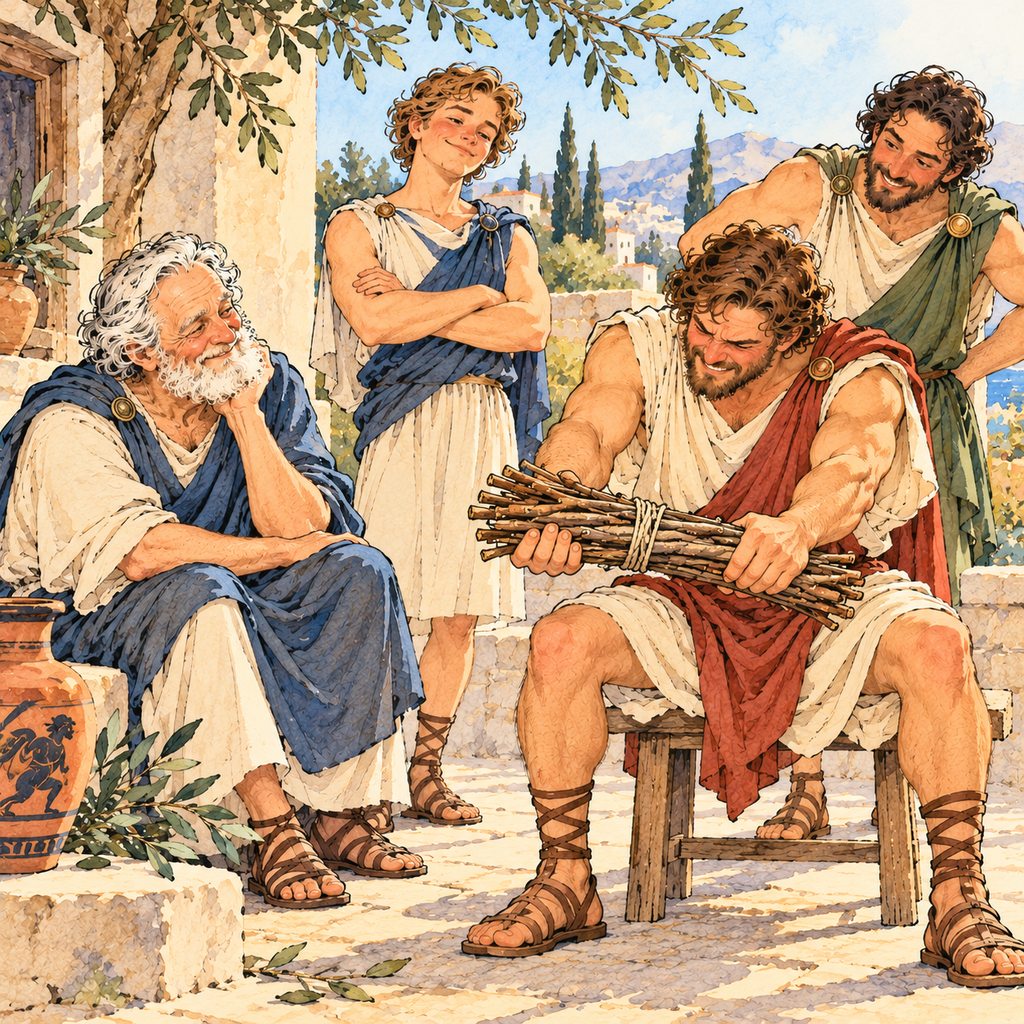
The fable is about unity, not the division of housework. But it raises a useful modern question: if a family claims to stand together, why does so much depend on one person’s strength? When her strength changes, cooperation must become something more substantial than saying, “We understand,” while handing her the grocery list.
Why Knowing the Diagnosis Doesn’t Fix the Household
A 2024 study in the Scandinavian Journal of Primary Health Care listened to 41 people in Spain: 26 women with fibromyalgia, five spouses, and ten children. Families described changing responsibilities, disagreement about caregiving, strained relationships, and financial pressures. Some relatives helped; others struggled to recognize or accept new roles.
This was a small qualitative study, not proof of how every family behaves. Its useful lesson is that illness changes a household’s arrangements, not just one person’s health. Agreement about a diagnosis doesn’t automatically produce agreement about who will cook, earn money, or cancel plans.
Sometimes relatives miss the older arrangement. So do you. But “I miss what we used to do” is different from “You should still do it.” One expresses loss; the other turns that loss into an assignment.
Replace Another Explanation With a New Agreement
If you’ve described your symptoms forty-seven times, try talking about the work instead. Choose one responsibility that repeatedly causes trouble and make the change specific: “I can grocery shop or prepare dinner today, but I cannot do both. Which one will you handle?” That’s a conversation about logistics, not a courtroom defense of your diagnosis.
Separate what you can do occasionally from what you can do reliably. “I enjoyed Sunday lunch” should not become “I can host every Sunday.” Before gatherings, agree on a shorter visit or an easy way to leave. For unpredictable days, decide who will take over a task without a fresh debate when symptoms worsen.
Money and energy may be tight for everyone. Sharing the load might mean simpler meals, fewer invitations, or accepting a house that’s clean enough instead of showroom-ready. It doesn’t have to mean hiring help. And the plan shouldn’t become another project you must manage alone: ask others to suggest and own their part.
Notice what changes afterward. Forgetting once and trying again is human. Persistently treating your limits as negotiable calls for firmer boundaries, not a fiftieth explanation.
Belief Becomes Understanding When Something Changes
Your relatives may never know exactly what fibromyalgia feels like. They don’t have to. They can trust what you say about your capacity, stop using your best day as the standard, and make the family arrangements fit the life you’re living now.
Aesop’s father wanted his sons to depend on one another, not on the strongest son doing everything forever. The worthwhile test isn’t whether your family can recite your diagnosis. It’s whether someone else picks up the grocery list when you say you can’t.
A question worth asking: What one family expectation needs to change so you can stop explaining and start feeling supported?
🌿 You Might Also Enjoy
You Changed. The Marriage Noticed. When health and capacity change, couples need arrangements that fit who they are today.
Maybe Today Is a 60 Percent Day Why yesterday’s energy shouldn’t become today’s impossible standard.
🌿 More Stories for the Life You’re Living
For practical ideas, gentle humor, and timeless stories about changing lives, join The FTF Monthly Letter. You’ll also receive Best I Can Do Is a Mustache, our free welcome book.

GET MY FREE BOOK & MONTHLY LETTER
What household rule have you cheerfully abandoned? Tell me below…✍️