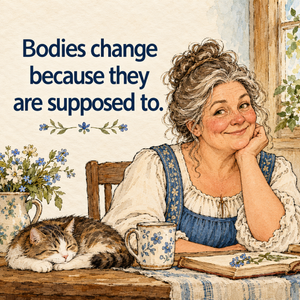
Apparently the old rules expired. Nobody thought to mention it.
You make a plan for the day based on completely reasonable assumptions.
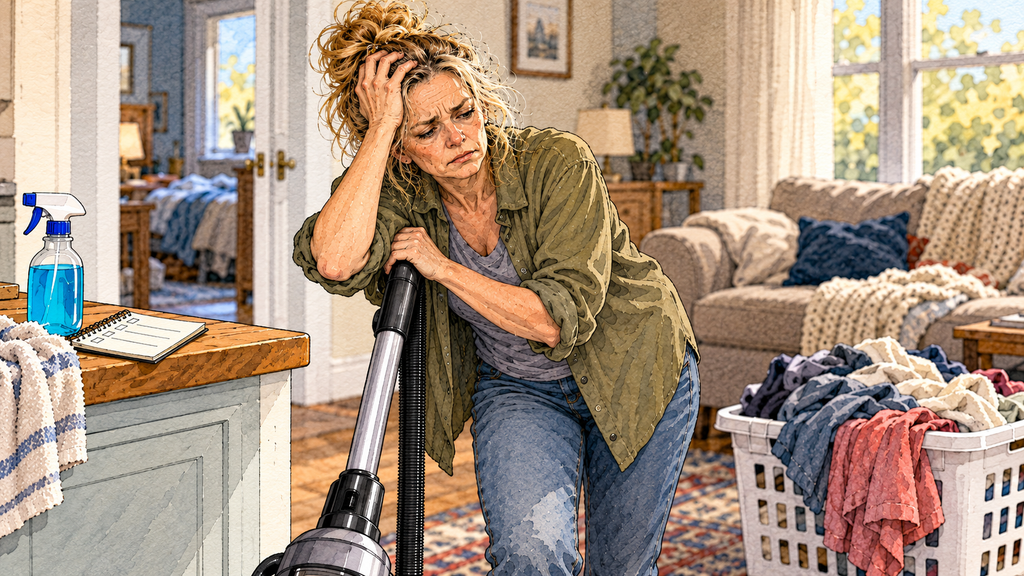
You will shower, get dressed, run a couple of errands, stop at the grocery store, come home, make dinner, answer a few emails, perhaps accomplish one additional useful thing before settling down for the evening.
Nothing heroic. Nobody is crossing the Alps. And yet somewhere between the pharmacy and the produce aisle, your body announces that today’s festivities are coming to a close.
Excuse me? We have things to do. The body is unmoved.
This is one of the more irritating parts of living in a body that has changed while your brain is still working from an older edition of the manual. You remember what a normal day used to hold. You remember what tired meant. You remember being able to borrow energy from tomorrow without tomorrow showing up with two large men and a collection agency.
So naturally, when the old formula stops working, we assume we’re doing something wrong.
Maybe we need to organize better. Exercise more. Rest more. Try harder. Eat differently. Become more disciplined. Buy a planner with nicer paper.
Or—and stay with me here—the instructions may simply be out of date.
Nobody Sent the Revised Edition
Bodies change. Energy changes. Health changes. Hormones change. Sleep changes. Families change. Work changes. Grief moves in and rearranges the furniture. Responsibilities arrive that were nowhere on the original floor plan.
Sometimes the change comes with a name and a date. Sometimes you just notice that Tuesday now costs what Thursday, Friday, and half of Saturday used to cost combined.
The problem is not only that our capacity changes. It’s that the old expectations often remain standing exactly where we left them. I should be able to do this. There is possibly no sentence responsible for more unnecessary misery. Should according to whom? You in 2008?
She had different knees.
Aesop Had a Dog With the Same Problem
This is where an old fable wanders in and, as usual, discovers that human beings have been doing the same ridiculous thing for a very long time.
In The Old Hound, an aging hunting dog goes after a boar just as he always has. He still knows his job. He still has the courage for it. He catches the animal by the ear—but his old teeth can no longer hold on, and the boar escapes. His master scolds him. Because apparently blaming somebody for aging is not a recent invention. The hound’s answer is the part worth keeping: the willingness is still there. The body is what changed.

There it is. Not laziness. Not lack of character. Not insufficient positive thinking. Changed equipment. And sometimes that is the information we keep refusing to put into the new manual.
We Keep Arguing With the Evidence
We are very loyal to old instructions.
If we used to clean the whole house in a day, then clearly the house should still be cleaned in a day. If we used to travel from breakfast until bedtime, apparently vacations must continue to resemble military campaigns. If we were always the dependable one, the organizer, the host, the person who could squeeze in one more thing, then changing any of that can feel alarmingly close to changing who we are.
So we bargain. But I used to be able to do this. Yes, sweetheart. We know. There are records. Other people my age are doing more. Good for Phyllis. We wish Phyllis nothing but happiness. But I already said I would. Ah. Well. In that case perhaps show the body the calendar. Maybe it didn’t realize. Eventually we have to stop putting today’s reality on trial for failing to resemble yesterday’s.
The evidence is in. Things changed. You changed. Some of what worked stopped working. Now what?
Keep the Life. Change the Machinery.
This is the part that matters. The answer is not necessarily to give things up. It is to figure out what you are actually trying to preserve. You may still want the trip. You just don’t want six attractions before lunch and a spiritual crisis in the hotel elevator. You may still want people around your table. Perhaps dinner no longer requires cleaning the baseboards as though the guests have been specifically invited to inspect them. You may still want meaningful work, creativity, friendship, family, learning, adventure, beauty, usefulness, independence, laughter.
Keep those. Those are the life. The machinery that supports them is allowed to change.
Maybe you do one errand instead of four. Maybe you sit down halfway through something. Maybe recovery time becomes part of the plan rather than an unfortunate scandal discovered afterward. Maybe you spend your best hours on something that matters to you instead of handing them to obligations that have been living rent-free on the calendar for fifteen years.
That isn’t making life smaller. That is getting more particular about what deserves a place in it.
Some of This Is Still a Loss
We don’t need to get adorable about it. There are changes that hurt. There are abilities we miss. There are freedoms we took for granted. There are moments when being told to “adapt” sounds very much like being handed a consolation prize and instructed to admire the ribbon.
The old hound knew the difference between what he had been able to do and what he could do now. There is grief in that. But notice what he did not say. He did not say he was no longer himself. His teeth had changed. His courage hadn’t.
That may be one of the most important distinctions we make as our lives change: capacity is not identity. What you can do in a day may change without changing what you care about. Your pace may change without changing your curiosity. Your strength may change without changing your usefulness. Your circumstances may change without requiring you to disappear inside them.
Get the Pencil
Maybe the old manual says rest comes after the work is finished. Cross it out. The work is never finished. Maybe it says a good day is a productive day. Who wrote that? Maybe it says you should keep doing something because you have always done it. That’s not a reason. That’s a hostage note from the past. Maybe it says changing the way you live means admitting defeat. Absolutely not. It means you’re paying attention.
A useful life is not built by endlessly forcing old instructions onto new circumstances. It is built by noticing what has changed, deciding what still matters, and adjusting the rest so there is enough of you left to enjoy what you kept.
And yes, the manual will probably change again. Of course it will. Apparently, this thing has revisions. Fine. Get the pencil.
🐕 What part of your life are you still trying to run by old instructions—and what could you change about the way you do it without giving up the part that still matters?